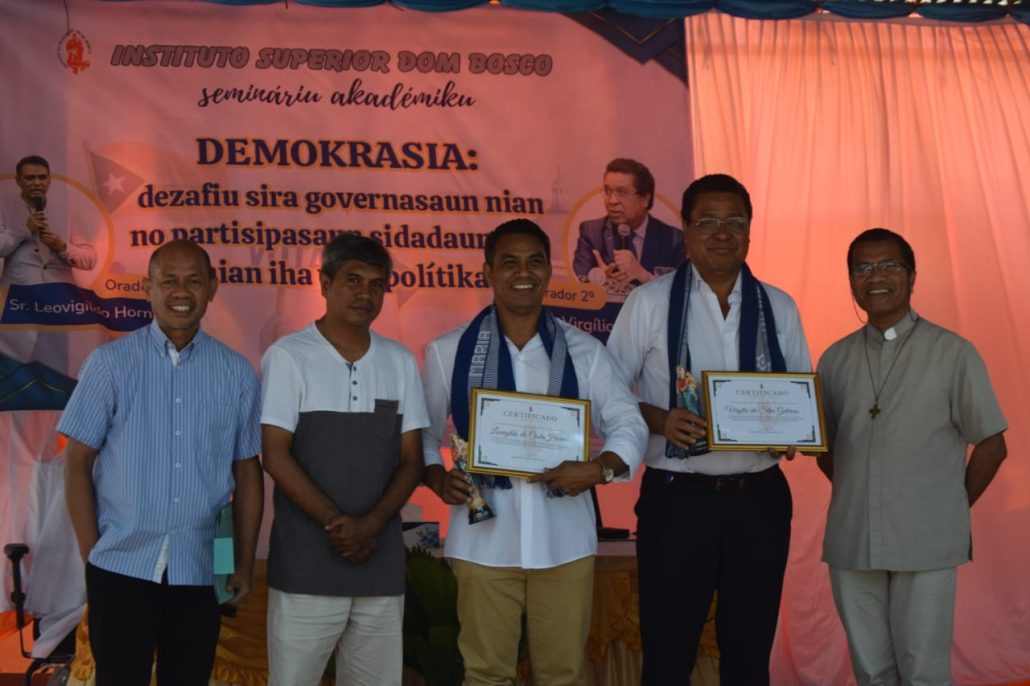
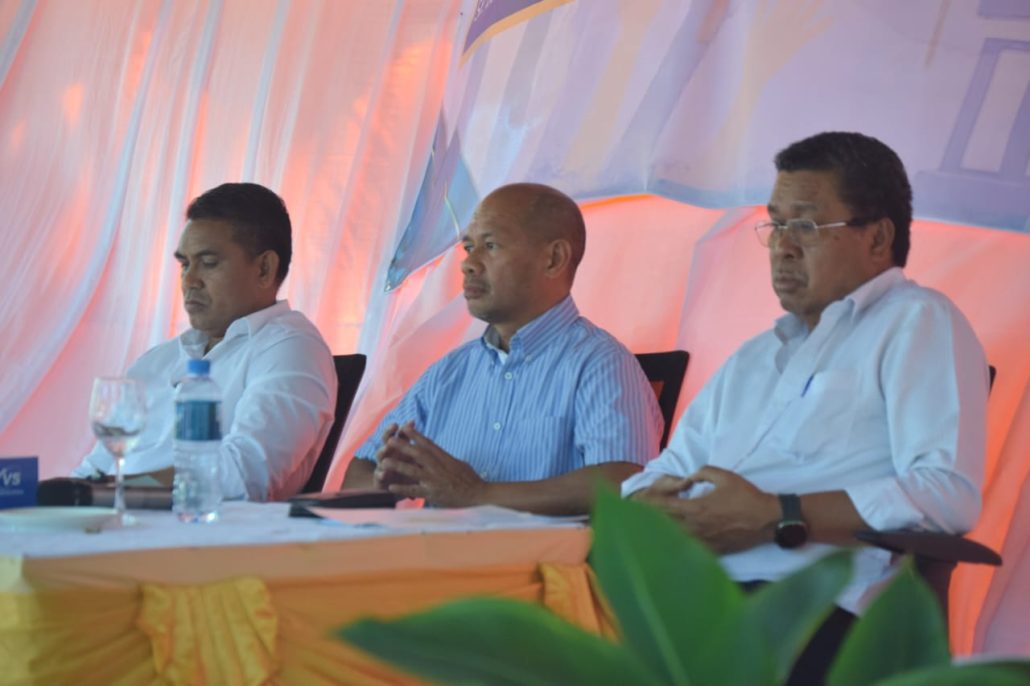
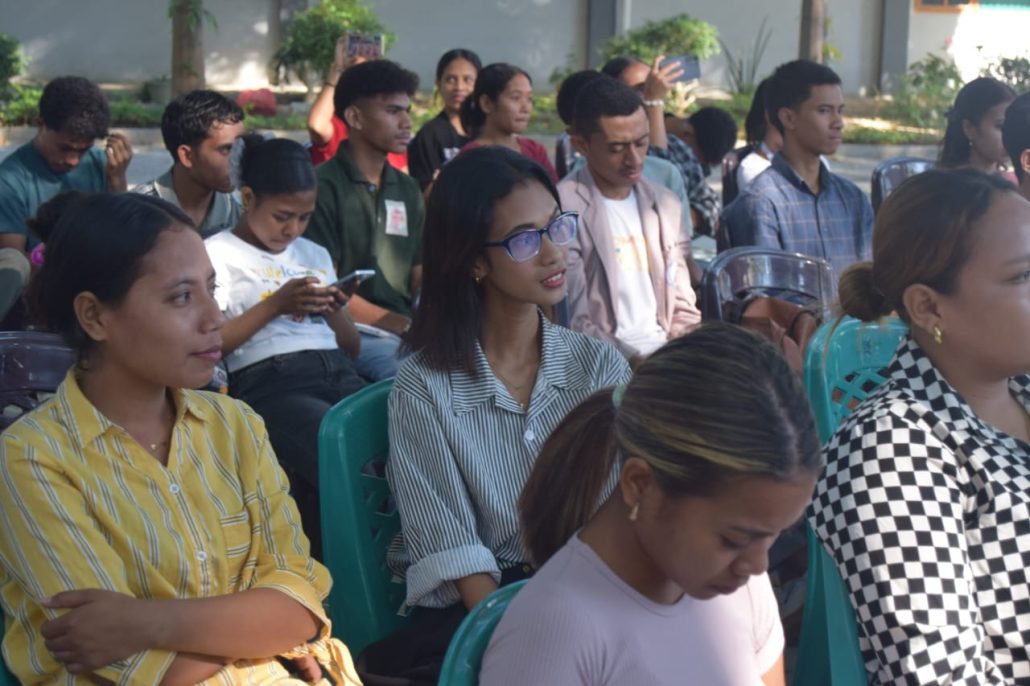
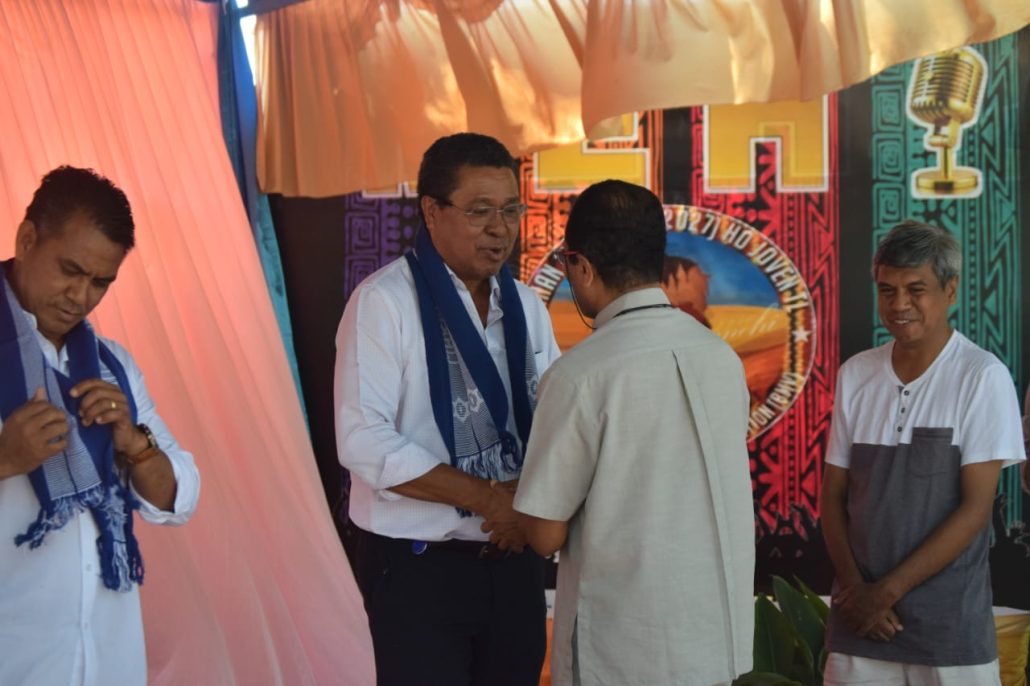
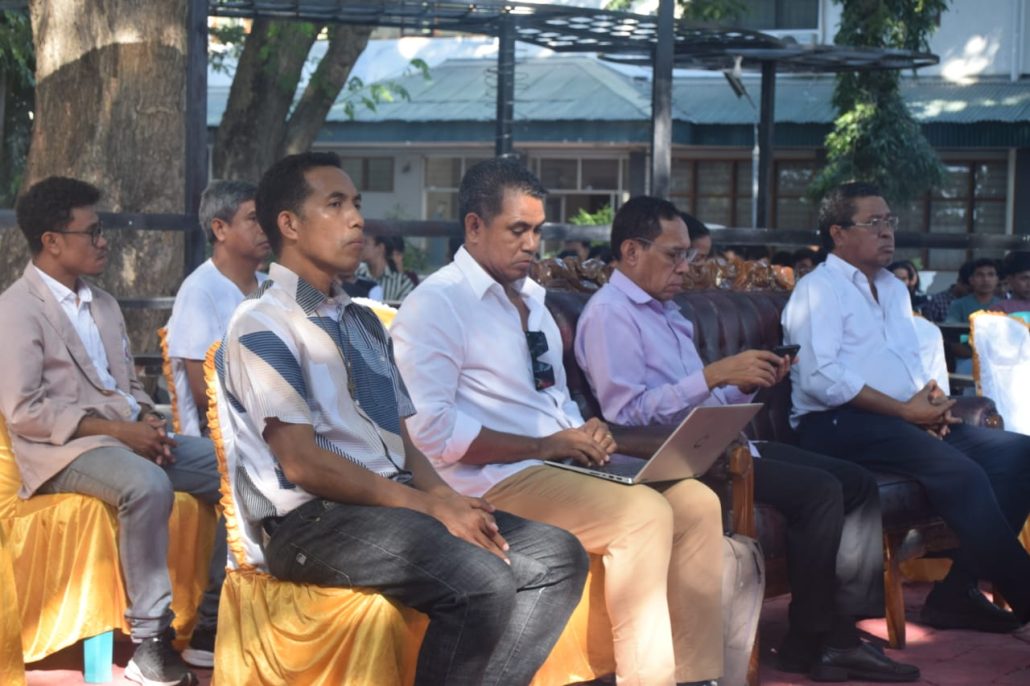
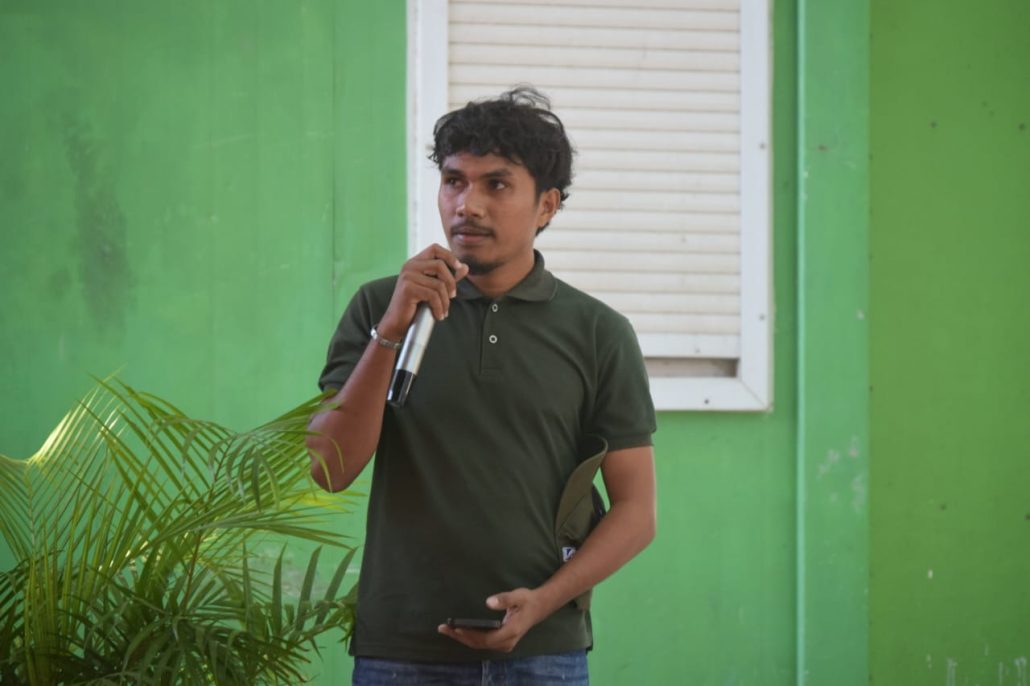
On 6 June 2026 – Instituto Superior Dom Bosco organized a public seminar entitled “Democracia: Desafios da Governação e da Participação dos Cidadãos na Vida Política” (Democracy: Challenges of Governance and Citizen Participation in Political Life). The event brought together students, academics, and members of the general public to engage in a critical discussion on the meaning and practice of democracy in contemporary Timor-Leste. As part of its commitment to fostering civic awareness and public dialogue, ISDB invited two distinguished Timorese public figures, Mr. Leovigildo Hornai and Mr. Virgílio Guterres, to serve as keynote speakers. Their participation provided valuable insights into the political realities of the country and encouraged participants to reflect on the responsibilities associated with democratic citizenship.
The primary objective of the seminar was to promote a broader understanding of democracy among Timorese students, particularly those studying at ISDB, while also reaching a wider public audience. A central message emphasized throughout the seminar was that democracy should not be understood merely as a political process that takes place once every five years through national elections. Although elections remain an essential component of democratic governance, democracy itself extends far beyond the act of voting. It encompasses the continuous involvement of citizens in public affairs, decision-making processes, and community development initiatives. In this sense, democracy requires the active participation of all members of society in contributing to the progress and well-being of the nation.
During their presentations, both speakers highlighted various challenges currently faced by Timor-Leste in strengthening democratic governance. These challenges include issues related to political participation, public accountability, institutional development, and the need for greater civic engagement among younger generations. Drawing upon their professional experiences and observations, they discussed how democratic systems can only function effectively when citizens are informed, engaged, and willing to participate constructively in public life. Their reflections helped participants understand that democracy is not a static concept but rather an ongoing process that demands commitment, dialogue, and cooperation between the state and its citizens.
Furthermore, the seminar underscored the importance of political participation as a fundamental element of democratic society. The speakers stressed that every individual, regardless of age, social status, or professional background, has a role to play in shaping the future of the country. Political participation is not limited to holding public office or joining political parties; it also includes activities such as engaging in public discussions, expressing opinions responsibly, contributing to community initiatives, and holding public institutions accountable. Through these forms of engagement, citizens become active agents in the democratic process rather than passive observers.
Through the organization of this seminar, ISDB demonstrated its commitment as a developing educational institution to creating spaces for intellectual exchange and civic education. Recognizing that democratic concepts are often perceived as abstract, complex, or lacking transparency, ISDB seeks to make these ideas more accessible and understandable to young people and the broader community. By facilitating open discussions and encouraging critical reflection, the institution aims to strengthen democratic awareness and promote informed citizenship. ISDB also intends to continue organizing similar academic and public seminars in the future, with the hope of contributing to national development and fostering a shared understanding of democratic values among the people of Timor-Leste. Through such initiatives, the institution aspires to support the development of a more participatory, inclusive, and resilient democratic society.